
By clicking Get My Free Quote, I give Ohlmeyer Insurance (David Ohlmeyer Jr. Agency) and its licensed agents my prior express written consent, by electronic signature, to contact me with calls and text messages — including marketing calls and texts made using automated technology or an artificial or prerecorded voice — and by email, at the number and email I provided, about my insurance quote and related insurance products and services, even if my number is on a Do Not Call list. My information is never sold or shared with other agencies for their own marketing. Consent is not a condition of purchase; I can call (985) 876-0116 instead. Message frequency varies. Message and data rates may apply. Reply STOP to opt out, HELP for help. I agree to the Privacy Policy and Terms of Use, including the arbitration clause and E-SIGN consent.
Maybe your renewal just arrived and the declarations page lists a named-storm deductible you don’t remember choosing, next to lines for wind and a note that flood isn’t covered. Maybe a storm is in the Gulf, the cone covers Terrebonne Parish, and you’re wondering what your policy would actually pay. Or maybe you went through Ida or Francine and found out the hard way that wind, water and your car were three different claims.
Here’s the part that surprises most people: there’s no single “hurricane insurance” policy in Louisiana. A hurricane can hit your home with wind, rain, storm surge and flooding all at once, and each of those is handled by a different coverage, sometimes on a different policy, with a different deductible. Hurricane insurance is really a set of coverages that have to fit together.
This guide walks through that set: the wind coverage in your home policy, the separate named-storm or hurricane deductible and what it means in dollars, flood insurance and its 30-day wait, wind-only and Louisiana Citizens coverage, your car and your living costs while you’re out of the house, FORTIFIED roofs and the Fortify Homes grants, a checklist for before June 1 and the steps for a claim after the storm. We help South Louisiana homeowners with these questions from our offices in Houma, Raceland and Lafayette.
Is there such a thing as hurricane insurance in Louisiana?
The short answer: Not as one policy; hurricane protection is your home policy’s wind coverage, its named-storm deductible, a separate flood policy, comprehensive on your car and loss-of-use coverage, working together.
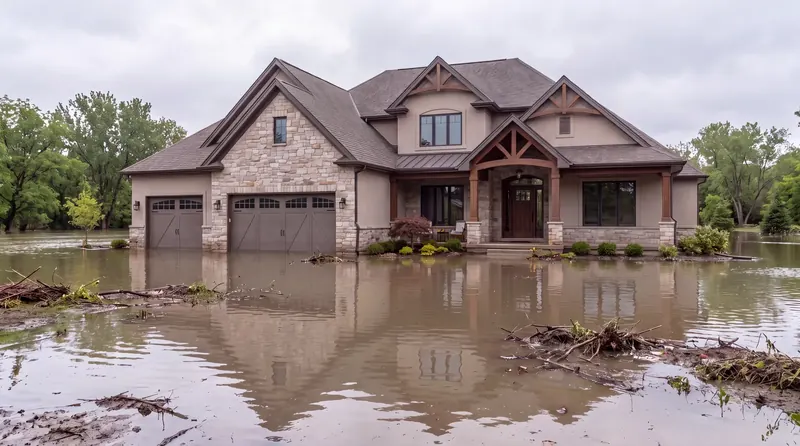
Think about what a hurricane actually does to a house in the Bayou Region. Wind peels shingles and drops a pine tree on the roof. Rain blows in through the opening. Storm surge or a rising bayou pushes water through the front door. The car in the driveway sits in that water. And if the house can’t be lived in, you’re paying for a hotel and meals for weeks.
Each of those losses is handled differently. Recent storms show why it matters here. According to the National Hurricane Center’s Tropical Cyclone Report on Hurricane Ida (April 4, 2022), Ida came ashore at Port Fourchon on August 29, 2021 as a Category 4 hurricane with maximum winds of 130 knots, about 150 mph. Three years later, the NHC’s Sept. 11, 2024 update reported that Hurricane Francine made landfall in Terrebonne Parish, about 30 miles south-southwest of Morgan City, as a Category 2 with maximum sustained winds near 100 mph.
Here’s how the pieces line up, so you can see which policy answers which kind of damage:
| Hurricane damage | Coverage that usually responds | Deductible to expect |
|---|---|---|
| Wind tears off shingles; rain gets in through the opening | Your home policy’s dwelling coverage, if wind isn’t excluded | Named-storm or hurricane deductibleOften a percentage of the insured value. |
| A tree falls on the house during the storm | Your home policy, if wind isn’t excluded | Named-storm or hurricane deductibleWhen the storm meets your policy’s definition. |
| Storm surge or rising water enters the home | A separate flood policy (NFIP or private); home policies exclude flood | Flood policy deductibleSeparate from your home deductibles. |
| Your car floods or a limb crushes it | Comprehensive coverage on your auto policy | Comprehensive deductibleLiability-only policies don’t pay. |
| You can’t live in the house during repairs | Additional living expenses (loss of use) on your home policy, after a covered loss | Check your limitPays the increase over your normal costs, up to the policy’s limit. |
| Your policy excludes wind (common on the coast) | A wind-only or wind and hail policy, which can come from Louisiana Citizens | That policy’s wind deductibleCheck it separately. |
The rest of this guide takes those rows one at a time.
Does your Louisiana home policy cover hurricane wind damage?
The short answer: Usually yes, but some coastal policies exclude wind and hail, and even when wind is covered, a named-storm or hurricane deductible normally applies before the policy pays.
Most homeowners policies treat windstorm as a covered peril. That includes damage to the house, other structures like a detached garage, and your belongings when wind or wind-driven debris breaks the building open. Rain that comes in through a wind-damaged roof or window is generally part of the same wind claim. Water that rises from the ground isn’t; that’s flood.
Along the coast, though, wind isn’t always in the policy. The Louisiana Department of Insurance’s Consumer’s Guide to Homeowners Insurance (updated 2020) says some homeowners policies, especially for coastal property, exclude wind and hail damage. When that happens, you need a separate wind-only or wind and hail policy to fill the gap. LDI’s guide notes Louisiana Citizens offers that coverage as a supplement.
Where Louisiana Citizens fits
Louisiana Citizens Property Insurance Corporation is the state’s insurer of last resort. Under La. R.S. 22:2302, a person with an insurable interest in property who has been denied coverage by one or more insurers authorized to write property insurance in Louisiana can apply to Citizens, through its Coastal Plan or its FAIR Plan. The statute says the application must clearly state that Citizens is an insurer of last resort, and its policies run for a term of no more than one year.
In plain English: Citizens exists so a Louisiana home can still be insured when the regular market won’t take it. It isn’t a better or worse option to weigh against anyone else. It’s the backstop. If your home is on Citizens today, it’s worth reviewing your situation each year, because what qualifies a home for the regular market can change after a new roof or other improvements.
How does a named-storm or hurricane deductible work in Louisiana?
The short answer: It’s a separate deductible, often a percentage of your home’s insured value, that applies to damage from a storm the National Hurricane Center has named or classified as a hurricane, and for most owner-occupied homes Louisiana law applies it on a calendar-year basis rather than in full for every storm.
Your policy probably has an all-perils deductible, a flat dollar amount like $1,000 or $2,500 for a kitchen fire or a burst pipe. Many Louisiana policies add a second deductible for named storms or hurricanes. LDI’s Hurricane Francine insurance guidance (2024) says a storm deductible typically ranges from 2% to 5% of a home’s total insured value, and that it’s the amount you pay out of pocket before your insurance pays for the claim.
When does it apply?
La. R.S. 22:1337 ties the definitions to the National Hurricane Center. A hurricane is a storm system the NHC has declared a hurricane, and a named storm is a storm system the NHC has named. A tropical storm can trigger a named-storm deductible even if it never reaches hurricane strength, while a hurricane deductible is tied to hurricanes. Exactly when the deductible starts and stops around a storm is set by your policy’s wording, so read that definition on your policy.
The statute also sets three rules worth knowing:
- Once per calendar year. For homeowners and similar policies on owner-occupied one- or two-family homes issued or renewed on or after January 1, 2010, the separate named-storm or hurricane deductible applies on an annual, calendar-year basis to all qualifying losses.
- A second storm in the same year. If another storm hits later that year, the insurer can apply a deductible equal to the greater of what’s left of your separate deductible or your all-perils deductible. The insurer may ask for records of the earlier losses, so keep them.
- A disclosure form. Since Act 331 of 2022, insurers must give you a form prescribed by the Commissioner of Insurance listing each named-storm, hurricane and wind and hail deductible on a new policy effective after January 1, 2023, and again when a deductible changes. The form is informational; it doesn’t change the policy.
- Your hurricane deductible is 5% of $250,000, or $12,500. That’s what you’d pay first on a hurricane claim, before the policy pays anything.
- In August, a hurricane causes $8,000 of roof damage. That’s below $12,500, so you pay it all. Keep the receipts: under La. R.S. 22:1337, it counts toward this year’s deductible.
- In September, another hurricane causes $20,000 of damage. What’s left of your hurricane deductible is $4,500 ($12,500 minus $8,000), which is more than your $1,000 all-perils deductible, so $4,500 applies, and the policy would have room for the other $15,500.
- With a 2% deductible instead, the first storm’s deductible would be $5,000, and the policy would have room for $3,000 of the August damage.
The habit we’d push hardest: know your hurricane deductible in dollars, not percent. “Five percent” sounds small. $12,500 isn’t. If that number would be hard to cover after a storm, it’s worth pricing a lower percentage, and if you choose to keep it, set that cash aside before June.
Why doesn’t your home policy cover hurricane flooding?
The short answer: Louisiana homeowners policies exclude flood, so storm surge and rising water need a separate flood policy, and a new NFIP policy generally waits 30 days before it takes effect.
LDI’s homeowners guide is blunt about it: homeowners policies in Louisiana don’t cover damage due to floods. In a hurricane, that’s often the biggest part of the loss. Storm surge, a bayou over its banks and rain that rises from the ground up are all flood, no matter how hard the wind was blowing at the time.
Flood coverage comes from a separate policy. Most people get it through the National Flood Insurance Program, an NFIP flood policy, which we can help you set up. Here’s what FEMA says about the NFIP, from its FloodSmart coverage page, its flood insurance brochure (Sept. 2024) and the federal waiting-period rule, 44 CFR 61.11:
- The 30-day wait is the trap. By the time a storm has a name and a forecast cone, it’s usually too late to buy flood coverage for that storm. Flood belongs on the list for the spring, not the week a storm forms.
- Flooding isn’t limited to high-risk zones. FEMA’s flood insurance brochure (Sept. 2024) says about one-third of NFIP flood claims from 2013 to 2023 came from outside high-risk flood areas.
- Building and contents are separate. The building limit covers the structure; contents coverage, for your furniture, clothes and appliances, is a separate amount you choose.
- The proof of loss has a deadline. LDI’s Francine guidance says to file your NFIP Proof of Loss within 60 days of the flood.
What covers your car and your living costs after a hurricane?
The short answer: Comprehensive coverage on your auto policy generally pays for a car damaged by floodwater or falling trees, and your home policy’s additional living expenses coverage can help pay the extra costs of living elsewhere after a covered loss.
Your car
Your home policy and your flood policy don’t cover vehicles. LDI’s Francine guidance says that if you have comprehensive coverage on your auto policy, you should be covered for flood damage to your vehicle; your comprehensive deductible still applies. A liability-only policy, the kind that meets Louisiana’s legal minimum, doesn’t pay for your own car at all. Our Louisiana car insurance guide explains how liability, collision and comprehensive fit together.
Before a storm, move vehicles to higher ground if you can, and photograph each one. After it passes, report the claim before you try to start a car that sat in water.
Your living costs
If a covered loss makes your home unlivable, additional living expenses coverage, often called loss of use, helps with the cost of staying somewhere else. LDI’s Francine guidance describes it as covering the increase over your normal costs for essentials like food, not your regular bills. If you normally spend $600 a month on groceries and you’re spending $1,100 on restaurant meals while the house is repaired, the difference is what ALE is designed for.
- Keep every receipt: hotel, rental house, meals, laundry, extra mileage.
- Know your limit: loss-of-use coverage usually has a dollar limit or a time limit on the declarations page.
- It follows a covered loss: ALE generally depends on the damage being covered by that policy. A home made unlivable only by flood is a flood claim, and a homeowners policy’s ALE may not respond.
By clicking Get My Free Quote, I give Ohlmeyer Insurance (David Ohlmeyer Jr. Agency) and its licensed agents my prior express written consent, by electronic signature, to contact me with calls and text messages — including marketing calls and texts made using automated technology or an artificial or prerecorded voice — and by email, at the number and email I provided, about my insurance quote and related insurance products and services, even if my number is on a Do Not Call list. My information is never sold or shared with other agencies for their own marketing. Consent is not a condition of purchase; I can call (985) 876-0116 instead. Message frequency varies. Message and data rates may apply. Reply STOP to opt out, HELP for help. I agree to the Privacy Policy and Terms of Use, including the arbitration clause and E-SIGN consent.
How can a FORTIFIED roof lower your hurricane risk and premium?
The short answer: A roof built to the IBHS FORTIFIED Roof standard resists wind better, Louisiana’s Fortify Homes Program grants up to $10,000 toward one, and a state rule requires insurers to provide FORTIFIED discounts by January 1, 2027.
A lot of hurricane damage starts at the roof. Once shingles and decking come off, rain follows. That’s why Louisiana has put real money into stronger roofs.
The Louisiana Fortify Homes Program
According to LDI’s Fortify Homes Program FAQ (checked October 2026):
- The grant: up to $10,000 to upgrade a roof to the FORTIFIED Roof standard, a wind mitigation standard from the Insurance Institute for Business & Home Safety (IBHS). Homeowners pay for permits, inspections and any construction cost above the grant.
- Timing is everything: you must apply for and be awarded a grant before selecting a contractor and starting construction. If you hire a contractor and begin work before acceptance, LDI says you won’t be eligible.
- How you get in: grant lottery registration periods open periodically. You can create a program profile at any time and sign up for announcements of the next round.
- Who qualifies: your primary residence, with a homestead exemption verified if you’re selected, an active residential insurance policy with wind coverage, and proof of flood insurance if the home is in a FEMA Special Flood Hazard Area.
When the work passes, LDI says you receive a certificate you can share with your insurer for a discount on your premium. Even without a grant, LDI notes you can ask your agent about adding a FORTIFIED endorsement, so a roof damaged in a covered event can be replaced to that standard. LDI also says the certificate lasts five years, and renewing it takes a reinspection.
FORTIFIED discounts and the 2027 deadline
LDI Bulletin 2026-04 (revised and reissued April 29, 2026) tells insurers that Regulation 136 requires premium discounts for residential properties with a FORTIFIED designation. Insurers must put them in place no later than January 1, 2027, on new and renewed residential property policies. The discounts are based on a Louisiana-specific NAIC benchmark table that varies by region (North, Central and South) and by designation (FORTIFIED Roof, Silver and Gold), and they reflect the modeled reduction in hurricane losses. Because the benchmarks are built on hurricane losses, news coverage of the rule (WAFB, Sept. 24, 2026) describes them as required discounts on the hurricane portion of your premium, not the whole bill; amounts vary by insurer and region.
Other discounts can help too, such as a multi-policy discount for keeping your home and auto together. Discounts vary and are subject to terms, conditions and availability. A stronger roof is one of the few that can also lower the chance you’ll need a claim at all.
What should Louisiana homeowners check before hurricane season?
The short answer: Before June 1, put your hurricane deductible in dollars, confirm wind is covered, buy or renew flood coverage at least 30 days ahead, check your dwelling limit and loss-of-use limit, and document your belongings.
NOAA’s National Ocean Service notes that hurricane season begins June 1 and ends November 30, and that storms have formed outside that window. Because of the flood waiting period, spring is when the decisions that matter get made. Here’s the checklist we walk through with homeowners:
- Find your hurricane deductible and convert it to dollars
Look for “named storm” or “hurricane” on the declarations page and, if your policy came with one, the deductible disclosure form. Multiply the percentage by your insured value. Could you pay that next week?
- Confirm wind is covered somewhere
If your home policy excludes wind and hail, make sure a wind-only policy is active, and note its deductible too.
- Buy or renew flood coverage now
A new NFIP policy generally takes 30 days to start. Check your building and contents amounts, not just whether you have a policy.
- Check the dwelling limit against rebuilding cost
Your dwelling limit should reflect what it would cost to rebuild today, not what the house would sell for. After a big storm, labor and materials can cost more.
- Know your loss-of-use limit
Find the dollar or time limit for additional living expenses and think about what a few months away from home would cost your family.
- Document your home and belongings
LDI’s homeowners guide suggests listing your possessions and taking photos or video, with copies kept away from the house. Walk every room and the outside of the house, including the roof if you can see it safely.
- Keep comprehensive on your cars
It’s the auto coverage that pays for floodwater and falling trees. If you’ve dropped it on an older car, decide whether you could replace that car out of pocket after a storm.
- Save the numbers you’ll need
Your policy numbers, the claims number on your ID card, our office line and LDI’s consumer line, 1-800-259-5300, somewhere that doesn’t depend on your home Wi-Fi.
How do you file a hurricane insurance claim in Louisiana?
The short answer: Report the claim as soon as you safely can, photograph everything before cleanup, make temporary repairs and keep receipts, file separate wind and flood claims, and know the deadlines Louisiana law sets for your insurer.
The days after a storm are exhausting. A few steps, done in order, make the claim easier. These come from LDI’s Hurricane Francine guidance and its homeowners guide:
- Report it quickly. Contact your agent or insurance company as soon as possible. Use the claims number on your ID card or call us.
- Photograph before you clean. Take pictures or video of damage inside and outside the home, and don’t throw damaged items away until the adjuster has seen them.
- Prevent more damage. Make temporary repairs, like a tarp on the roof, and keep receipts for materials and a record of the work. Don’t start permanent repairs until your adjuster says to.
- Be careful with contracts. LDI’s homeowners guide advises not to sign contracts or work orders until you’ve spoken with your insurance company, and its Francine guidance says to insist on a written contract that spells out the scope of work.
- Keep track of the money. LDI notes that cashing a claim check doesn’t mean you agree with the amount. If you later find more damage than was documented, you can file a supplemental claim, which LDI says is generally available for up to two years.
The deadlines your insurer works under
La. R.S. 22:1892, as amended through the 2025 session, sets the clock. In plain English:
| Step | Deadline under Louisiana law |
|---|---|
| Start adjusting a property claim | Within 14 days after you notify the insurer of the loss |
| Start adjusting after a catastrophic loss | Within 30 days after notification. For a declared emergency or disaster, the Commissioner can extend that by up to another 30 days |
| Pay the claim | Within 30 days after receiving satisfactory proof of loss |
| Make a written settlement offer on a property damage claim | Within 30 days after receiving satisfactory proof of loss, extended by any days the insurer started adjusting early |
“Satisfactory proof of loss” is doing a lot of work in that table. The clock on payment runs from when the insurer has what it needs to evaluate the claim, which is another reason to document thoroughly and answer requests quickly. If a claim stalls, start with your adjuster and your agent. If that doesn’t resolve it, LDI takes consumer calls at 1-800-259-5300.
The bottom line
Hurricane insurance in Louisiana isn’t one policy. It’s wind coverage on your home policy or a wind-only policy, a named-storm or hurricane deductible you should know in dollars, a separate flood policy bought well ahead of the 30-day wait, comprehensive on your cars and loss-of-use coverage for the weeks you can’t be home. When they fit together, a storm is a hard month. When one is missing, it can be a hard year.
The best time to check how your pieces fit is before June 1, and the second-best time is now. A stronger roof, through the Fortify Homes Program or your next re-roof, can help on both the damage and the premium.
Send us your ZIP below, or call our Houma or Raceland office at (985) 876-0116 (call or text) or our Lafayette office at (337) 232-1800. We’ll read your declarations page with you, put your hurricane deductible in dollars and check that wind, flood and loss of use are all accounted for. You can also start on our home insurance page or go straight to a free quote.
By clicking Get My Free Quote, I give Ohlmeyer Insurance (David Ohlmeyer Jr. Agency) and its licensed agents my prior express written consent, by electronic signature, to contact me with calls and text messages — including marketing calls and texts made using automated technology or an artificial or prerecorded voice — and by email, at the number and email I provided, about my insurance quote and related insurance products and services, even if my number is on a Do Not Call list. My information is never sold or shared with other agencies for their own marketing. Consent is not a condition of purchase; I can call (985) 876-0116 instead. Message frequency varies. Message and data rates may apply. Reply STOP to opt out, HELP for help. I agree to the Privacy Policy and Terms of Use, including the arbitration clause and E-SIGN consent.
Louisiana hurricane insurance FAQ
Does homeowners insurance cover hurricane damage in Louisiana?
Partly. Most Louisiana homeowners policies cover wind damage from a hurricane, including rain that gets in through a wind-damaged roof or window, after your named-storm or hurricane deductible. They don’t cover flood: storm surge and rising water need a separate flood policy, usually through the NFIP. Some coastal policies also exclude wind and hail, which means you need a separate wind-only policy, sometimes from Louisiana Citizens. Your car falls under comprehensive coverage on your auto policy, if you carry it, not your home policy. Read your declarations page to see which of these pieces you actually have.
How is a hurricane deductible calculated in Louisiana?
Most named-storm and hurricane deductibles are a percentage of your home’s insured value, and LDI says they typically range from 2% to 5%. To put yours in dollars, multiply the percentage by the insured value on your declarations page. On a home insured for $250,000, a 2% deductible is $5,000 and a 5% deductible is $12,500. That’s the amount you pay first on a qualifying storm claim before the policy pays. Your policy wording controls how it applies, so check which value it uses and whether it’s labeled named storm or hurricane.
Does the hurricane deductible apply to every storm in a year?
Not in full. Under La. R.S. 22:1337, for homeowners policies on owner-occupied one- or two-family homes issued or renewed since January 1, 2010, the separate named-storm or hurricane deductible applies on a calendar-year basis. If a second storm causes damage later in the same year, the insurer can apply the greater of what’s left of your storm deductible or your regular all-perils deductible. The insurer may ask for records of earlier losses, so keep receipts and photos from every storm, even damage you paid for yourself.
How far ahead do I need to buy flood insurance before a hurricane?
At least 30 days in most cases. FEMA says there is a 30-day waiting period before a new NFIP policy goes into effect, with limited exceptions. By the time a storm has a name and a forecast track toward Louisiana, it’s usually too late to buy coverage for that storm. That’s why flood belongs on your spring checklist, well before hurricane season starts on June 1. FEMA also notes you can buy an NFIP policy if your community participates in the program, whatever your flood zone.
Who can get coverage from Louisiana Citizens?
Louisiana Citizens Property Insurance Corporation is the state’s insurer of last resort. Under La. R.S. 22:2302, a person with an insurable interest in property who has been denied coverage by one or more insurers authorized to write property insurance in Louisiana can apply, through its Coastal Plan or FAIR Plan. Its policies run for a term of no more than one year and renew annually if the premium is paid and the property remains insurable. LDI’s homeowners guide also notes Citizens offers wind and hail coverage as a supplement when a homeowners policy excludes it.
How much is the Louisiana Fortify Homes grant?
The Louisiana Fortify Homes Program grants up to $10,000 to upgrade a home’s roof to the IBHS FORTIFIED Roof standard, according to LDI. Homeowners pay for permits, inspections and any construction cost above the grant. You must apply for and be awarded a grant before choosing a contractor or starting work, and grants are awarded through lottery registration periods that open periodically. The home must be your primary residence, with active residential insurance that includes wind coverage, and flood insurance if it’s in a FEMA Special Flood Hazard Area.
How long does an insurer have to pay a hurricane claim in Louisiana?
Under La. R.S. 22:1892, an insurer must pay a property claim within 30 days after receiving satisfactory proof of loss, and make a written settlement offer on a property damage claim within the same 30 days. It must start adjusting a property claim within 14 days of notice, or within 30 days after a catastrophic loss, and the Commissioner can extend that by up to another 30 days in a declared emergency. NFIP flood claims follow federal rules; LDI says to file the NFIP Proof of Loss within 60 days.
Last reviewed by David Ohlmeyer Jr. on .